
Blog
Why You Need to Refill Your Fire Extinguisher
Published Apr 06, 2026 11:37 PM • Updated Apr 07, 2026 12:07 AM
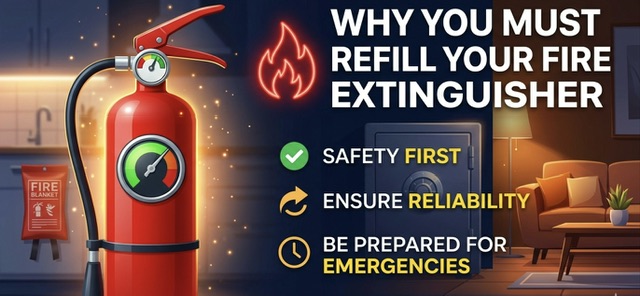
A fire extinguisher is a pressurized container. The effectiveness of the extinguisher to put out a fire is determined by two factors: the extinguishing agent (the powder, water, or gas inside) and the propellant. If either is compromised, the device transforms into a "red bucket" that does nothing in an emergency.
1. The "single-use" rule
The most crucial reason to replenish an extinguisher is that it must be refilled after each use, even if it has just half discharged.
- Pressure Loss: When the seal is broken by a brief spray, the internal pressure leaks out through the valve. Even if the gauge appears to be in the "green" zone immediately after usage, it is likely to be empty or under-pressurized within a few days or weeks.
- Valve Obstruction: Dry chemical extinguishers contain incredibly fine powder. Once utilized, microscopic particles of the chemical can become lodged in the valve seat, preventing it from entirely sealing and resulting in a steady, silent leak.
2. Over Time, Natural Depressurization
Over time, the extinguisher may lose pressure even if you never touch it.
- Seal Degradation: Over time, rubber O-rings and seals may stiffen, split, or deteriorate, enabling propellant gas—typically nitrogen—to leak out.
- Temperature Fluctuations: The cylinder may expand and contract due to extreme heat or cold, which could eventually compromise the seals and result in pressure loss.
3. Maintaining the Extinguishing Agent
The contents inside do not stay "fresh" indefinitely.
- Compaction: Over time, gravity and vibration can cause the chemical agent in dry powder extinguishers to settle and pack down to the bottom of the cylinder. During a refill/recharge service, professionals ensure that the agent is "fluffed" or replenished so that it flows smoothly.
- Internal Corrosion: Moisture can enter the cylinder, causing the agent to clump or the metal walls to corrode.
4. Legal Compliance and Insurance
Compliance with Bureau of Fire Protection (BFP) standards in the Philippines is mandatory for obtaining a Fire Safety Inspection Certificate (FSIC). Failure to comply with an inspection might result in significant fines.
- Liability: If there is a fire and your extinguisher fails because it was not maintained, your insurance carrier may reject your claim.